Home › Industries
Industries we supply
PPE selection follows the hazard, not the catalogue page. Here is how we specify for each of the sectors we serve, and which lines come up most often.
Under Zambia's Occupational Health and Safety Act No. 36 of 2010, the duty to provide a safe workplace — including suitable protective equipment — sits with the employer. Getting the specification right is a legal matter as well as a practical one. See our safety resources for how the standards work.
Mining
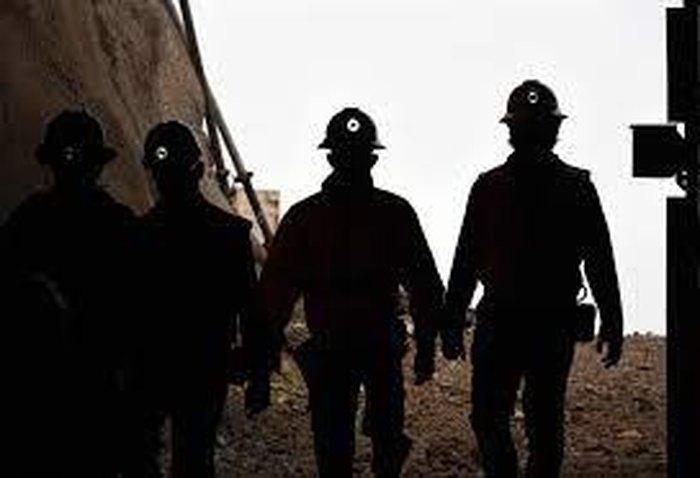
Underground and open-pit operations stack hazards: overhead impact, respirable dust, sustained noise, working at height on plant structures, and wet or muddy conditions underfoot. Copperbelt operations also run long shifts, so anything uncomfortable gets taken off — and PPE that is not worn protects nobody.
We supply crews on the Copperbelt and into North-Western Province, and we are used to procurement that works to product codes, requisitions and standing supply arrangements.
Typical specification
- Head — hard hats with two-point chin-strap retention where there is active or elevated work (C09)
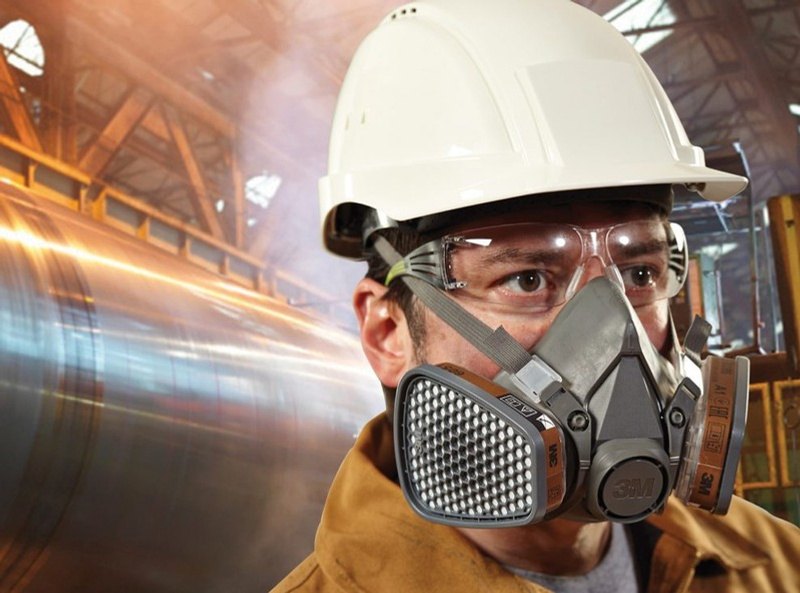
- Respiratory — FFP3 disposable respirators for higher-level particulate exposure (C10)
- Hearing — 27 dB ear muffs, subject to a noise exposure assessment (P13)
- Footwear — safety boots for routine duty (P14, P17) and gumboots for wet headings (P18, P19)
- Height — EN 361 full-body harnesses with EN 355 energy-absorbing lanyards, and EN 360 self-retracting lifelines for plant access
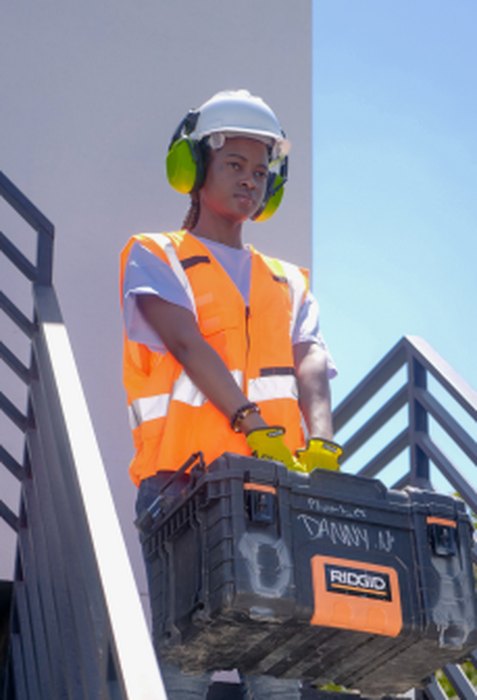
- Visibility — reflective vests around vehicle and machinery movement (P05, P06)
Manufacturing
Production environments are dominated by hand injuries and hot work. Sharp-edged material handling, guarding gaps at transfer points, grinding and welding, and repetitive tasks where a glove has to give dexterity as well as protection.
Typical specification
- Hands — nitrile-coated grip gloves for general handling (C03); cut level 5 liners with nitrile coating for sharp-edged work (C04); double-palm welding gloves for hot work (P10)
- Eye and face — wraparound and Euro-style safety glasses for routine tasks (C06, C07); welding shield with the appropriate lens shade (P11)
- Body — leather aprons and spats against sparks, spatter and hot debris (P08, P09)
- Workwear — 65/35 conti suits with colour options for role or company identification (P01)
- Hearing — ear muffs on noisy lines (P13)
Water utilities
Utility crews move between the roadside, the pump house and the treatment works in a single shift. That means visibility around traffic, water-resistant footwear for wash-down and standing water, and chemical protection at the dosing point.
Typical specification
- Visibility — lime green reflective vests for roadside and low-light work (P05); assorted-colour vests for visitors and general identification (P06)
- Footwear — gumboots for wet, muddy and wash-down environments (P18, P19)
- Chemical — acid-resistant worksuits for dosing and chemical handling (P04); Type 5/6 disposable coveralls for short-duration tasks (C02)
- Height and confined space — EN 361 harnesses with positioning belts for reservoir and chamber access; EN 360 retractable blocks for vertical entry
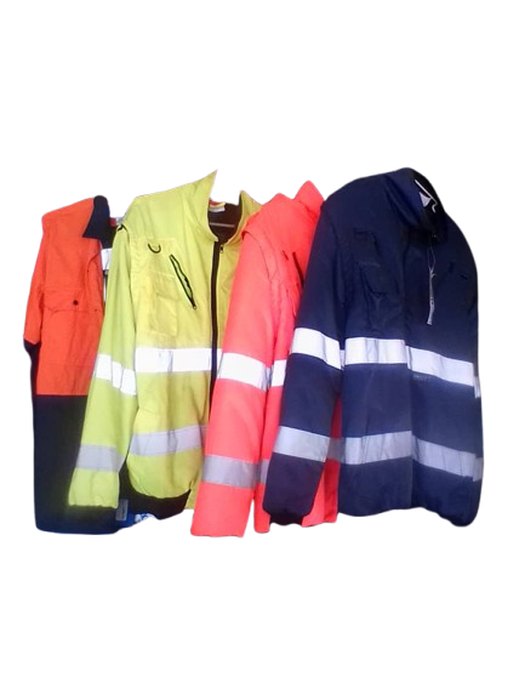
- Cold and exposure — insulated jackets for early starts and exposed outdoor work (P07)
Process industries
Acid and chemical splash, particulate exposure and reagent handling define the specification here. Disposable programmes matter: the right coverall used once and discarded is often safer and cheaper than laundering a contaminated garment.
Typical specification
- Chemical garments — D59 flame and acid resistant worksuits for the highest-exposure tasks (P02); Javlin acid-resistant worksuits for routine chemical handling (P04)
- Disposables — KARAM 65 g microporous Type 5/6 coveralls for particulate and limited liquid splash (C02)
- Respiratory — FFP2 and FFP3 respirators matched to the assessed airborne hazard (C10, C11)
- Eye — sporty clear goggles for splash and dust (C05)
- Hands — specify to the chemical, not to the task; talk to us about EN ISO 374 options beyond the catalogue
Farming and agriculture
Field work brings a hazard set that industrial buyers rarely think about: snake exposure in long grass, spray operations, wet-work in dairies and pack houses, and long unshaded outdoor shifts.
Typical specification
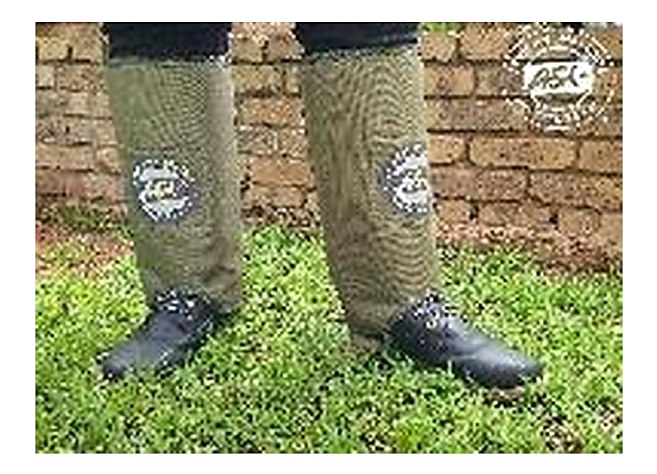
- Lower leg — snake gaiters for field, farming and outdoor work in snake-prone areas (P12)
- Footwear — heavy-duty gumboots for agricultural wet-work (P19); economical gumboots for general yard duty (P18)
- Spray operations — acid and chemical resistant worksuits (P04) with FFP respirators and goggles
- Workwear — lightweight 100% polyester worksuits for warm working conditions (P03)
- Hands — nitrile grip gloves for general handling (C03)

Mineral processing
Continuous plant means continuous exposure. Noise does not stop between shifts, respirable dust is constant around crushing and screening, and elevated access to conveyors, chutes and thickeners is routine rather than occasional.
Typical specification
- Hearing — 27 dB ear muffs as the plant standard, backed by an exposure assessment (P13)
- Respiratory — FFP3 respirators around crushing, screening and transfer points (C10)
- Height — EN 360 self-retracting lifelines from 2 m to 15 m for conveyor and structure access; padded EN 361 harnesses for extended work (PN 24, PN 42(03))
- Dropped objects — single and twin tool lanyards rated to 10 kg for work over live plant (TL 01(N), TL 02(N))
- Reagent handling — acid-resistant worksuits and disposable coveralls (P04, C02)
Tell us about the site
Describe the task and the exposure and we will propose the specification — not just the cheapest line that fits the category.
